

%201.png)

How Much House Can I Really Afford?

Krista Hartmann
Comfortable and confident – those are some of the feelings you come away with after meeting Krista...
Comfortable and confident – those are some of the feelings you come away with after meeting Krista...
"How much house can I afford?"
It's one of the first questions most buyers ask when they're thinking about purchasing a home.
But I think there's actually a better question:
"How much house can I comfortably afford?"
Those are not necessarily the same number.
A lender may determine that you qualify to borrow enough to purchase a $500,000 home. That's valuable information, but it doesn't automatically mean you should start searching for homes at $500,000.
Your mortgage payment needs to fit into the rest of your life.
After helping home buyers throughout the St. Louis area since 2014, I've learned that one of the most important conversations we can have before starting a home search is about what you actually want your housing expenses to look like—not simply the maximum amount a lender says you can borrow.
Start With the Monthly Payment, Not Just the Purchase Price
Buyers naturally search for homes by price.
$300,000.
$400,000.
$500,000.
But you don't actually write a check for the purchase price every month.
You make a housing payment.
That's why I encourage buyers to work backward.
Instead of starting with:
"What's the most expensive house I can buy?"
Start with:
"What monthly housing expense would allow me to live comfortably?"
Then talk with your lender about what purchase price may correspond with that payment based on current interest rates, your down payment, loan program, taxes, insurance, and other costs.
That gives us a much more useful starting point for your home search.
Your Mortgage Is Only Part of the Cost
When buyers estimate what a house will cost each month, they sometimes look only at principal and interest.
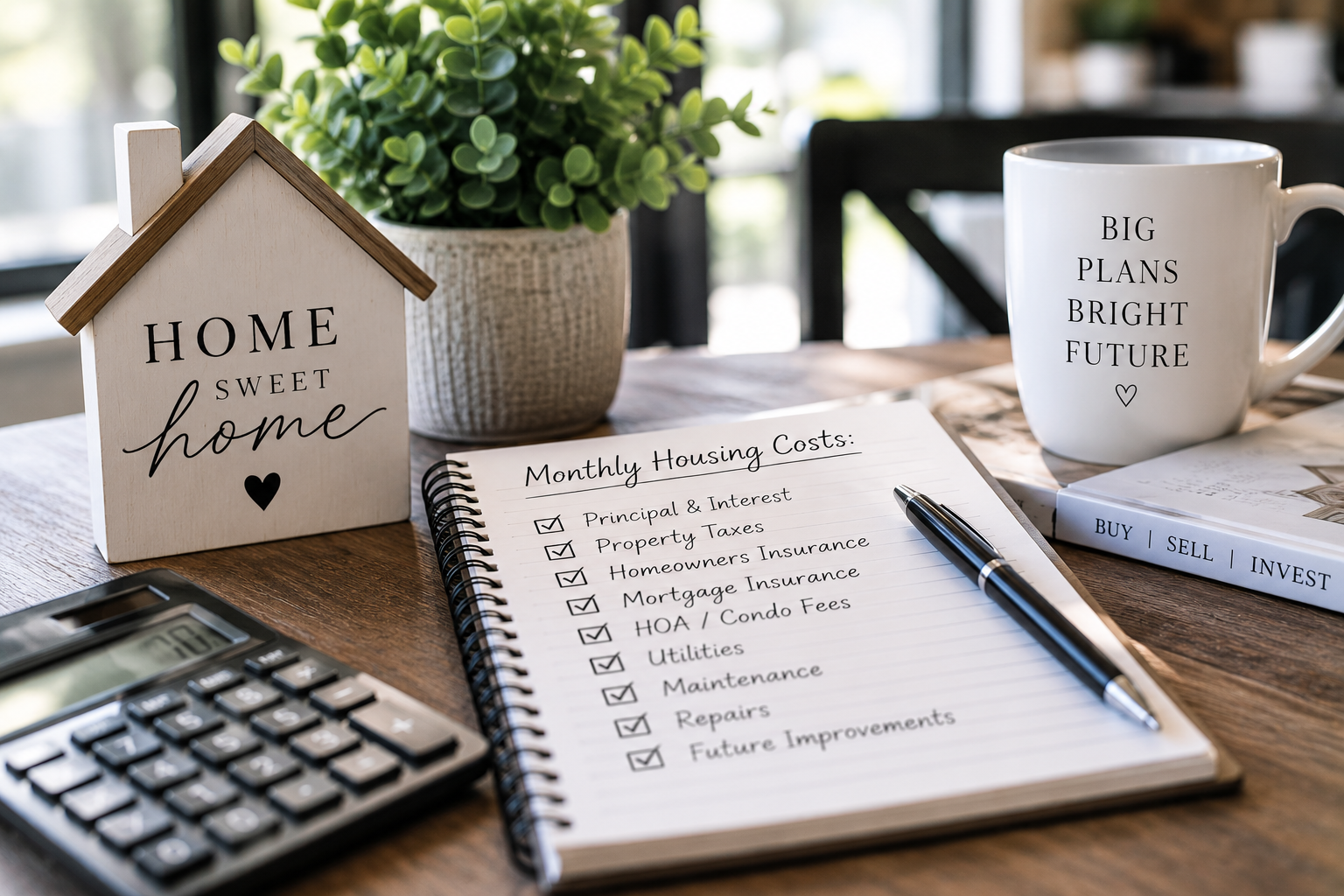
But your actual monthly housing expense may include several other items.
Depending on the property and financing, these could include:
- Principal and interest
- Property taxes
- Homeowners insurance
- Mortgage insurance
- Homeowners association fees
- Condo fees
And then there are expenses that aren't necessarily part of the mortgage payment at all.
Utilities.
Maintenance.
Repairs.
Lawn care.
Potential improvements.
Those costs matter too.
Property Taxes Can Make a Difference
This is particularly important when shopping throughout the St. Louis metropolitan area.
Property taxes can vary depending on where you're buying and the particular property.
That means two homes listed at the exact same price won't necessarily cost the same amount each month.
If you're comparing homes in different municipalities, counties, or school districts, we need to look beyond the asking price.
For example, buyers searching in St. Louis County, Jefferson County, St. Charles County, or St. Louis City may encounter different tax situations.
Even within the same general area, the numbers can vary from property to property.
That's one reason I don't like buyers making assumptions based solely on the listing price.
We need to look at the actual property.
Don't Forget About HOA and Condo Fees
Homeowners association fees are another expense buyers sometimes underestimate.
A monthly HOA fee might not seem significant when you're looking at a home's purchase price, but it affects your monthly budget.
Condo fees can be even more important because they may cover various shared expenses or services.
This doesn't mean an HOA or condo fee is necessarily bad.
You need to understand what you're paying and what you're receiving in return.
When I'm helping a buyer consider a condo, villa, or property within an association, I want them to understand that the purchase price is only one piece of the financial picture.
The Age and Condition of the Home Matter
Here's another factor buyers don't always consider when determining affordability.
Suppose you're comparing two $400,000 homes.
Home A has:
A newer roof.
Newer HVAC.
Updated electrical.
Recently replaced windows.
Home B has:
A 20-year-old roof.
An aging furnace.
Older windows.
Several maintenance items that will likely need attention.
They're both $400,000.
Are they equally affordable?
Maybe not.
Home B could still be an excellent purchase, especially if you love the location or other features.
But I want you to understand what you may need to spend after closing.
That's why inspections and understanding the home's condition are so important.
Leave Room for Life
This is probably the biggest reason I don't want buyers automatically purchasing at the maximum amount they're approved for.
You still have a life.
Maybe you like to travel.
Maybe you have children involved in activities.
Maybe you enjoy going out to dinner.
Maybe you're saving aggressively for retirement.
Maybe you want to buy furniture after you move.
Or perhaps you simply value having a healthy emergency fund.
Your house shouldn't consume every available dollar.
I want my buyers to love their homes without feeling trapped by the payment.
Think About the Money You'll Need After Closing
Buying a home involves more than coming up with the down payment.
There may also be closing costs and other expenses associated with the transaction.
Then you get the keys.
And suddenly you realize you need:
A lawn mower.
Blinds.
Furniture.
A refrigerator.
Paint.
A ladder.
Or fifteen other things you never needed while renting.
Homeownership has a funny way of producing shopping lists.
That's why keeping some money in reserve can be incredibly valuable.
I don't want buyers emptying every account just to get through closing if they can avoid it.
Your lender and financial advisor can help you determine the financial approach that's appropriate for your situation.
Your Down Payment Is Part of the Strategy
Many buyers assume they must put 20% down to purchase a home.
That's not always the case.
Different loan programs may offer different down-payment requirements depending on your qualifications.
Sometimes putting less down and keeping additional cash available makes sense.
Other buyers prefer a larger down payment.
There isn't one answer that's right for everyone.
This is where working with a knowledgeable lender becomes important.
Your lender can show you different scenarios so you can understand how your down payment affects your loan, monthly payment, and cash needed at closing.
Then you can make an informed decision.
Don't Forget About Interest Rates
Interest rates also influence affordability.
A change in the interest rate can affect the monthly payment associated with the same purchase price.
That's why a buyer who qualified for a particular price range months ago shouldn't automatically assume the same numbers still apply today.
If it's been a while since your pre-approval, check with your lender before getting serious about a property.
I'd rather confirm the numbers before we write an offer than discover afterward that the payment isn't what you expected.
Your Comfortable Budget May Change as You Look at Homes
This happens more often than people realize.
A buyer might initially tell me:
"We don't want to spend more than $400,000."
Then we begin looking.
They discover that $400,000 homes in the locations they're considering don't provide what they need.
Now we have choices.
Maybe they adjust the location.
Maybe they adjust their wish list.
Maybe they decide they're comfortable spending more.
Or maybe they decide the original budget matters more than some of the features they wanted.
None of those answers is wrong.
Home shopping is partly a process of discovering what matters most to you.
My job isn't to push you into a higher price range.
It's to help you understand the trade-offs so you can decide what you're comfortable doing.
Consider Your Future Plans
Another question I like buyers to think about is:
How long do you expect this home to work for you?
Nobody can predict the future, but your plans still matter.
Are you buying a starter home?
Planning to have children?
Expecting to work from home?
Thinking about aging parents?
Planning to stay for ten years?
If spending slightly more gives you a home that could work substantially longer, that may be worth considering.
On the other hand, stretching your budget for space you don't expect to need may not make sense.
Again, there isn't a universal answer.
We're looking for the right answer for you.
What You Qualify For and What You Should Spend Are Two Different Conversations
Your lender plays an essential role in determining what you qualify for and explaining your financing options.
As your real estate agent, my role is different.
I'm helping you apply those numbers to actual homes.
What do the taxes look like?
Is there an association fee?
What does the property's condition suggest about future maintenance?
What are comparable homes selling for?
Does this purchase price make sense in the context of the local market?
And most importantly:
Does this home make sense for your goals?
That's where good lender guidance and good real estate guidance work together.
Don't Let Competition Blow Up Your Budget
This becomes especially important in a multiple-offer situation.
Imagine you've decided you're comfortable purchasing up to $425,000.
Then you find the perfect house listed at $415,000.
There are multiple offers.
Suddenly, it's tempting to say:
"Let's just go to $450,000 so we win."
Maybe that makes sense.
Maybe it doesn't.
Before we make that decision, I want to talk through it.
How much is this particular house worth to you?
What might happen if the appraisal is lower than your offer?
How does the higher price affect your payment?
Are you still comfortable with the amount of cash you may need?
I absolutely want to help my buyers compete when they find a home they love.
But winning the offer isn't the only goal.
I want you to still feel good about the decision after the excitement of winning wears off.
A Good Budget Gives You Confidence
There's something incredibly helpful about knowing your numbers before you start seriously shopping.
Instead of wondering whether you can afford every house we see, you already have a framework.
You know your comfortable payment.
You understand your financing.
You know approximately how much cash you'll need.
You know how much you want to keep in reserve.
Then we can focus on finding the right home rather than constantly worrying about the money.
That makes the entire buying process more enjoyable.
Final Thoughts
So, how much house can you afford?
Your lender can help answer that question.
But I want you to answer another one:
How much house can you afford while still living the life you want to live?
Think beyond the purchase price.
Consider the monthly payment.
Property taxes.
Insurance.
Association fees.
Maintenance.
Repairs.
Your savings.
And your other financial priorities.
Buying a home should be exciting.
It should also be sustainable.
When I help someone buy a home in the St. Louis area, my goal isn't to help them purchase the most expensive property they can possibly qualify for.
It's to help them find a home they love at a price they're comfortable living with long after closing day.
Frequently Asked Questions
Should I spend the maximum amount my lender approves me for?
Not necessarily. Your maximum loan qualification and your comfortable housing budget may be very different. Consider your other expenses, savings goals, lifestyle, and future plans when deciding what you want to spend.
How do property taxes affect how much house I can afford?
Property taxes contribute to your overall housing expense and can vary by property and location. Two homes with identical purchase prices may therefore have different monthly costs.
Should I include HOA fees when setting my home-buying budget?
Yes. HOA or condo fees should be considered when evaluating your total monthly housing expense.
How much money should I keep after buying a home?
There's no single amount that's appropriate for everyone. Consider potential maintenance, repairs, moving expenses, and emergencies, and discuss your overall financial reserves with your lender or financial advisor.
Can I change my price range after I start looking at homes?
Absolutely. Buyers often adjust their search after seeing what different price ranges offer. The important thing is making sure any change still fits comfortably within your financial goals.
Selling Your Home?
Get your home's value - our custom reports include accurate and up to date information.