

%201.png)

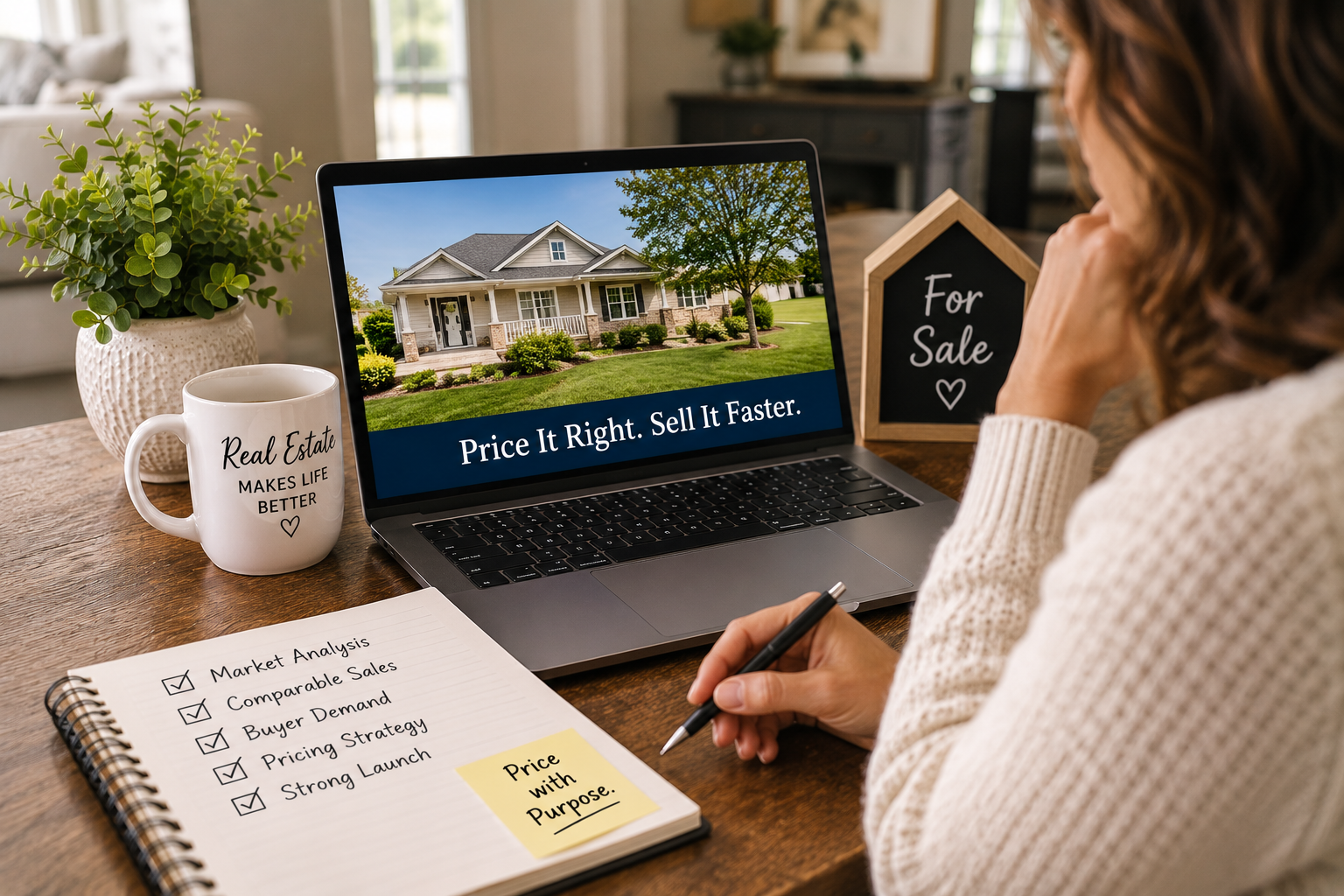
How to Price Your Home Correctly in Today's St. Louis Market

Krista Hartmann
Comfortable and confident – those are some of the feelings you come away with after meeting Krista...
Comfortable and confident – those are some of the feelings you come away with after meeting Krista...
If I had to choose one decision that has the biggest impact on a home's success, it would be pricing.
It's also one of the most misunderstood parts of selling a home.
Many homeowners assume the goal is to list their home at the highest possible price and negotiate from there.
It sounds logical.
After all, if someone is willing to pay your asking price, great. If not, you can always lower it later…right?
Unfortunately, that's not usually how buyers think.
After helping homeowners throughout the St. Louis area since 2014, I've found that pricing a home correctly from the very beginning often creates the strongest results—not just in terms of selling quickly, but sometimes in achieving a higher final sales price.
The First Two Weeks Matter More Than Most Sellers Realize
When a new listing hits the market, buyers notice.
They've been watching.
Waiting.
Setting up alerts.
The first week your home is listed is when it receives the most attention.
That's why your launch is so important.
If your home is priced competitively, shows well, and is professionally marketed, you have the greatest opportunity to create excitement during those first few days.
If it's significantly overpriced, many buyers simply move on.
Some won't even schedule a showing.
Others assume the seller isn't serious.
Once that initial excitement fades, it can be difficult to regain the same level of interest.
Market Value Isn't the Same as Emotional Value
Every homeowner has memories attached to their home.
Maybe it's where you raised your children.
Maybe it's where you celebrated birthdays, holidays, or family milestones.
Those memories are priceless.
But buyers aren't purchasing your memories.
They're comparing your home to every other property they've toured.
That's why pricing should be based on today's market—not yesterday's market, what a neighbor hopes to get, or what an online estimate says.
The market determines value, not emotion.
Why Online Estimates Can Be Misleading
One of the questions I hear frequently is:
"Zillow says my house is worth ______. Is that accurate?"
Online estimates can be interesting, but they don't know your home the way an experienced REALTOR® does.
They don't know:
- whether you've remodeled your kitchen
- if your basement is professionally finished
- whether your roof is brand new
- if your backyard backs to common ground
- how your lot compares to nearby homes
- what buyers are currently paying for similar properties
Those details matter.
That's why I rely on a comparative market analysis (CMA), current market conditions, and my experience evaluating buyer demand—not just an automated estimate.
Pricing Is Also Psychology
One thing many sellers don't realize is that buyers shop within price ranges.
Someone searching up to $500,000 may never see your home if it's listed at $505,000.
Pricing also influences perception.
A home priced appropriately often creates urgency.
A home that sits on the market for several weeks begins generating questions.
"What's wrong with it?"
Even if nothing is wrong.
The longer a home remains on the market without strong interest, the more buyers begin expecting a price reduction.
That's why I believe it's usually better to enter the market with a thoughtful pricing strategy than to chase the market later with multiple price reductions.
Why Overpricing Can Cost You Money
This is one of the hardest conversations I have with sellers because it's completely understandable to want to leave room for negotiation.
The problem is that overpricing often reduces the number of qualified buyers who ever see your home.
Fewer showings usually mean fewer offers.
And fewer offers often mean less negotiating power.
Ironically, homes that are priced appropriately sometimes receive multiple offers, giving sellers the opportunity to negotiate from a position of strength.
I've seen well-priced homes sell for more than overpriced homes simply because they generated stronger buyer interest from the beginning.
Every Home Deserves Its Own Strategy
One thing I never do is use the same pricing formula for every property.
A condo in Kirkwood requires a different strategy than a luxury home in Chesterfield.
A starter home in Fenton may attract a different pool of buyers than an investment property in South St. Louis City.
Current inventory.
Buyer demand.
Recent sales.
Condition.
Location.
School district.
Competition.
All of these factors influence pricing.
That's why I believe every pricing recommendation should be based on the individual property—not a generic formula.
Pricing Is More Than Picking a Number
One of the biggest misconceptions about pricing is that it's simply selecting a list price.
In reality, pricing is part of an overall marketing strategy.
Before recommending a price, I consider questions like:
- How many competing homes are currently available?
- How quickly have similar homes been selling?
- Are buyers receiving concessions?
- What's the likely appraisal range?
- Is this home expected to receive multiple offers?
- Are there seasonal factors that should influence our timing?
The answers help shape the strategy—not just the number.
My Philosophy on Pricing
One thing I've learned over the years is that sellers deserve honest advice.
Sometimes that means confirming the price they were hoping to hear.
Other times, it means having a difficult conversation supported by market data.
My responsibility isn't to tell homeowners what they want to hear.
It's to provide the information they need to make the best decision for their goals.
When pricing, I always ask myself one question:
"If this were my own home, what strategy would I recommend?"
That's the advice I give my clients.
Final Thoughts
Pricing your home isn't about testing the market.
It's about understanding the market.
A thoughtful pricing strategy creates more opportunities, attracts more qualified buyers, and often leads to stronger results.
Every home is different.
Every market is different.
And every seller's goals are different.
That's why I believe the best pricing decisions begin with accurate market data, honest conversations, and a strategy that's built specifically for your home—not someone else's.
Frequently Asked Questions
How is my home's value determined?
A home's value is based on a combination of recent comparable sales, current market conditions, location, condition, buyer demand, and competing listings—not just online estimates.
Should I price my home higher to leave room for negotiation?
In many cases, overpricing can reduce buyer interest and ultimately work against you. A thoughtful pricing strategy often produces stronger results than simply starting high.
How accurate are Zillow or online home value estimates?
Online estimates can provide a general idea, but they don't account for your home's condition, updates, location, or current buyer demand. A professional market analysis offers a much more complete picture.
Can pricing my home lower actually help me sell for more?
Sometimes, yes. A well-priced home can attract more buyers, generate increased competition, and occasionally result in multiple offers. Every situation is different, but proper pricing often creates more opportunities than overpricing.
Selling Your Home?
Get your home's value - our custom reports include accurate and up to date information.