

%201.png)

Should You Accept the First Offer on Your Home? | St. Louis Seller Guide

Krista Hartmann
Comfortable and confident – those are some of the feelings you come away with after meeting Krista...
Comfortable and confident – those are some of the feelings you come away with after meeting Krista...
It's one of the most common questions I hear from sellers.
"We just received our first offer...should we take it, or should we wait for something better?"
It's a fair question.
After all, if one buyer is interested, it seems logical to assume another one might come along tomorrow with an even higher offer.
Sometimes that happens.
Sometimes it doesn't.
The truth is, there's no automatic rule that says you should always accept—or always reject—the first offer.
The right decision depends on the strength of the offer, current market conditions, and your personal goals.
The First Offer Is Often a Good Offer
One of the biggest misconceptions in real estate is that the first offer is usually the weakest.
In my experience, that's often not true.
The buyers who write offers immediately after a home hits the market are usually the ones who have been actively searching.
They've been watching new listings.
They know what's available.
They recognize value when they see it.
When a well-prepared, properly priced home comes on the market, those buyers are often ready to act quickly.
That's why I encourage sellers to take every offer seriously—especially the first one.
Price Isn't the Only Thing That Matters
It's easy to focus on the purchase price.
But one of the biggest lessons I've learned since helping clients throughout the St. Louis area since 2014 is that the highest offer isn't always the best offer.
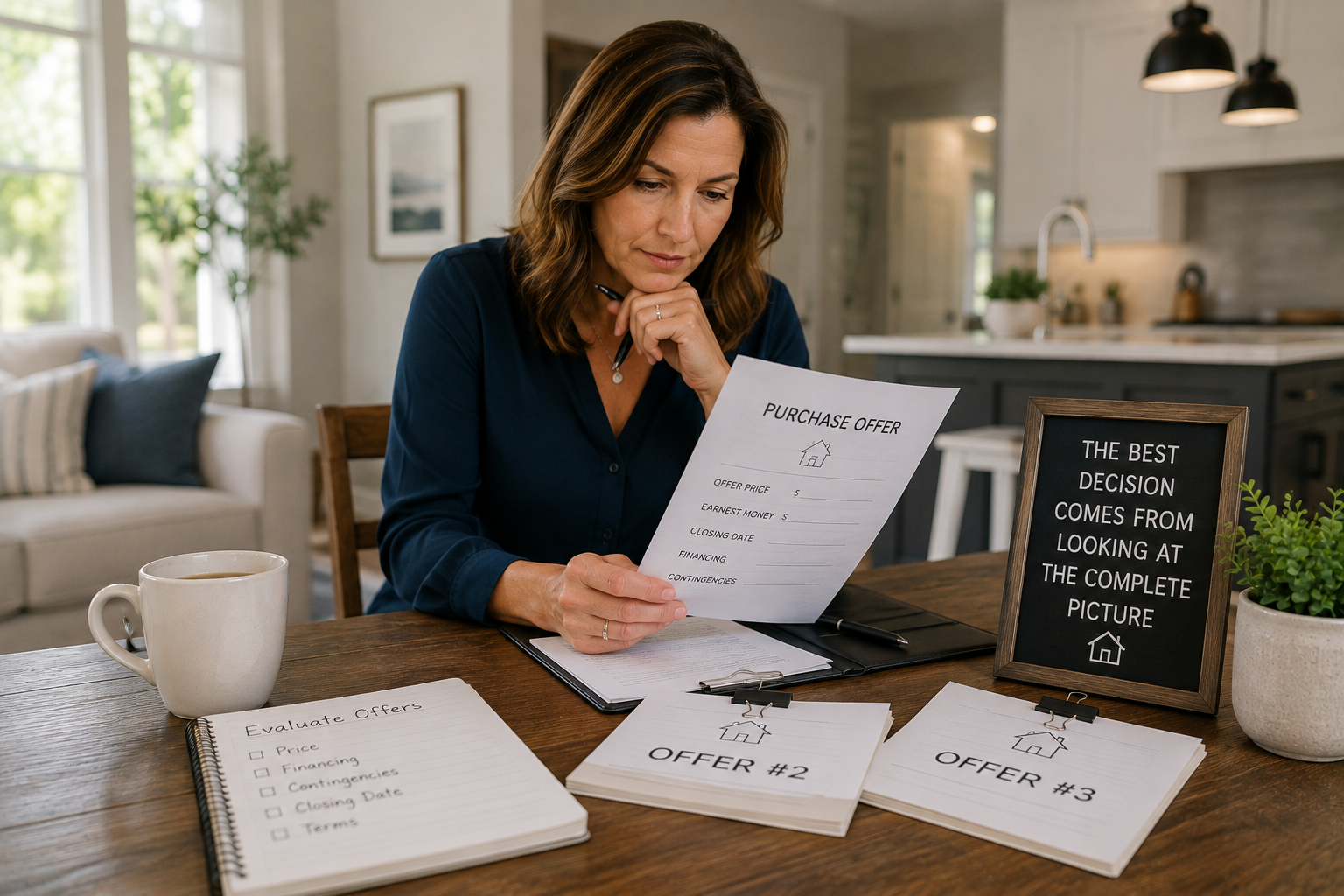
When reviewing offers, I encourage sellers to look at the complete picture.
Questions I ask include:
- Is the buyer pre-approved or pre-qualified?
- How much are they putting down?
- Are they requesting seller-paid closing costs?
- Are there financing contingencies?
- Is there a home sale contingency?
- How much earnest money are they offering?
- Are they asking for personal property?
- What's their proposed closing date?
- Are they requesting a home warranty?
- Have they included an appraisal gap guarantee?
Sometimes an offer that's $5,000 lower is actually stronger because it has fewer contingencies and a much greater likelihood of reaching the closing table.
Understanding Today's Market
The current market also plays a major role.
If inventory is low and buyer demand is strong, your home may receive multiple offers within the first few days.
In that situation, it often makes sense to review all offers together before making a decision.
On the other hand, if you're selling in a slower market or your home fills a more specialized niche, waiting for another offer simply because the first one arrived quickly may not be the best strategy.
Every situation is different.
That's why I don't believe in one-size-fits-all advice.
Why Preparation Matters Before the First Showing
One thing many sellers don't realize is that the goal isn't simply to get an offer.
The goal is to be completely prepared before the first buyer ever walks through the front door.
When a home is properly priced, professionally photographed, thoughtfully prepared, and marketed effectively from day one, it creates excitement.
That excitement often leads to stronger offers early in the listing period.
This is one reason I spend so much time helping sellers prepare before their home officially goes on the market.
The launch matters.
Don't Let Greed Make the Decision
This is probably one of the hardest conversations I have with sellers.
Imagine your home receives an excellent offer after just one day on the market.
Instead of feeling excited, many homeowners immediately think:
"If we got one offer this fast...maybe someone else will pay even more."
That's certainly possible.
But it's also possible that the first buyer was simply the right buyer.
Waiting isn't automatically wrong.
Accepting immediately isn't automatically right.
The important thing is making a thoughtful decision based on the facts—not emotion.
Negotiation Doesn't End With the First Offer
Another misconception is that your only choices are accepting or rejecting an offer.
In reality, there's often a third option.
Negotiation.
If the buyer has submitted a strong offer but there are a few terms you'd like to improve, we can often submit a counteroffer.
Maybe you'd like:
- a different closing date
- fewer repair obligations
- additional earnest money
- a higher purchase price
- fewer contingencies
Negotiation allows both parties to work toward an agreement that better meets everyone's needs.
Looking Beyond Closing Day
One thing I encourage sellers to consider is this:
The goal isn't simply to accept the highest offer.
The goal is to successfully close.
A contract is only the beginning.
The buyer still needs to complete inspections.
The appraisal must support the value.
Financing has to be approved.
Title work must be completed.
The transaction has to make it all the way to closing day.
That's why I believe evaluating the overall strength of an offer is just as important as evaluating the purchase price.
Every Seller's Priorities Are Different
Some sellers want to maximize every dollar.
Others need a specific closing date because they're purchasing another home.
Some are relocating for work.
Others are helping aging parents move.
Still others are settling an estate.
The "best" offer depends on what matters most to you.
Before reviewing offers, I always like to understand my clients' priorities so we can evaluate every offer through that lens.
Final Thoughts
Receiving your first offer is exciting.
It means your pricing, preparation, and marketing have attracted serious buyers.
Whether you decide to accept, negotiate, or wait for additional offers should depend on the strength of the entire contract—not just the purchase price.
Over the years, I've found that the best decisions come from looking at the complete picture and making a thoughtful choice based on your goals.
Every offer deserves careful consideration.
And sometimes, the very first one turns out to be the best one.
Frequently Asked Questions
Is the first offer usually the best offer?
Sometimes it is, and sometimes it isn't. The right decision depends on the strength of the offer, current market conditions, and your personal goals.
Should I wait for multiple offers?
Not necessarily. While some homes receive multiple offers, others don't. Every market and every property is different.
Can I negotiate after receiving an offer?
Absolutely. Counteroffers are a normal part of many real estate transactions and allow both parties to negotiate terms beyond just the purchase price.
What makes one offer stronger than another?
In addition to price, factors like financing, contingencies, earnest money, appraisal gap coverage, and closing timeline all contribute to the overall strength of an offer.
Selling Your Home?
Get your home's value - our custom reports include accurate and up to date information.