

%201.png)

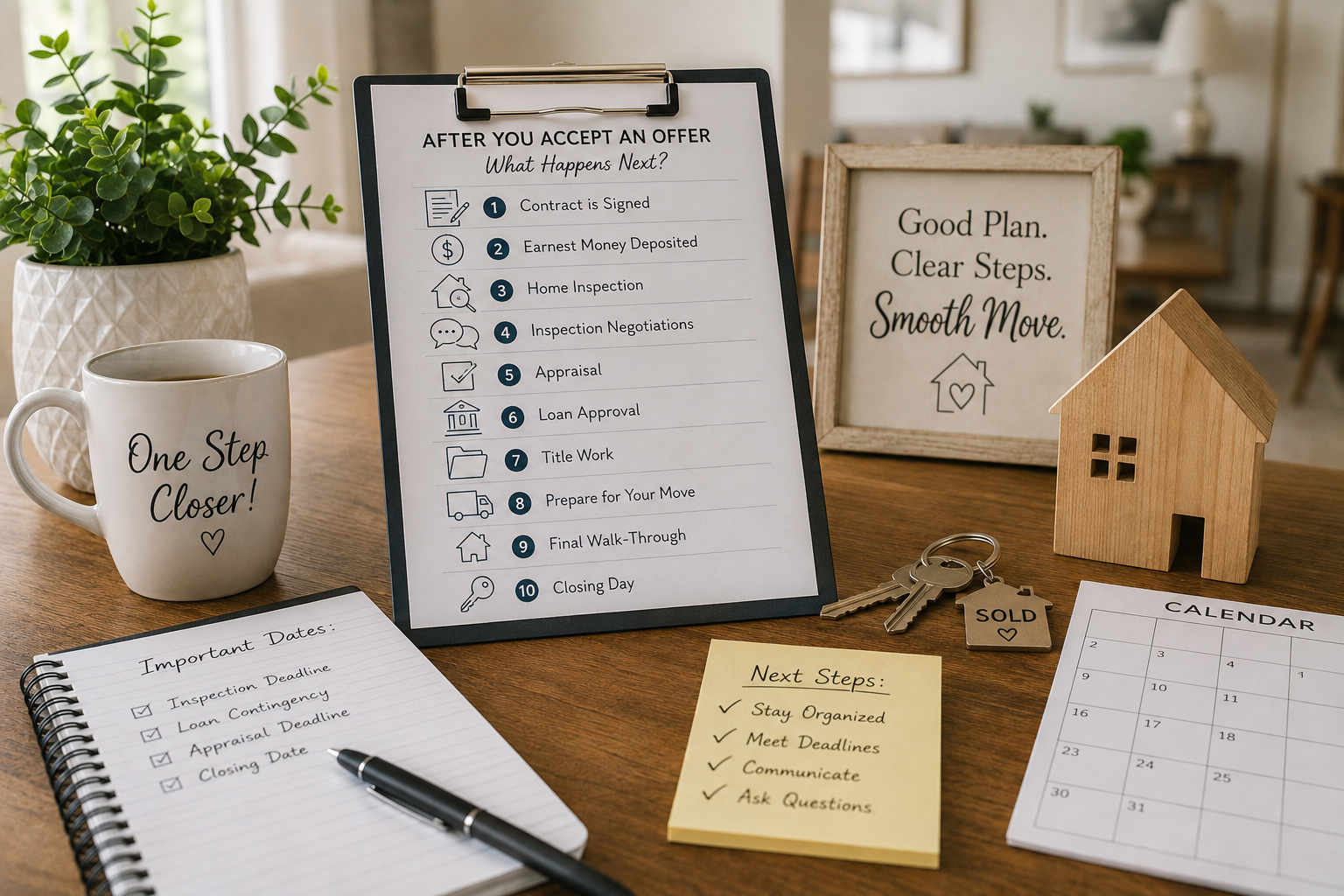
What Happens After You Accept an Offer? A Seller's Step-by-Step Guide

Krista Hartmann
Comfortable and confident – those are some of the feelings you come away with after meeting Krista...
Comfortable and confident – those are some of the feelings you come away with after meeting Krista...
Receiving an offer on your home is exciting.
Accepting one is even more exciting.
But for many sellers, that's when the questions begin.
"Now what?"
One of the biggest misconceptions about selling a home is that once an offer is accepted, the hard part is over.
In reality, you're entering the next phase of the transaction—one that includes inspections, financing, title work, and many important deadlines.
The good news?
If you understand what's coming, the process feels much less overwhelming.
Since helping homeowners throughout the St. Louis area since 2014, I've found that one of the best ways to reduce stress is simply helping people know what to expect before each step arrives.
Step 1: The Contract Is Signed
Once both the buyer and seller have signed the contract, you officially have an accepted offer.
Congratulations!
However, the home isn't sold just yet.
There are still several important milestones that must happen before closing day.
From this point forward, staying organized and meeting deadlines becomes very important.
One of my responsibilities is helping sellers keep track of those deadlines so nothing falls through the cracks.
Step 2: Earnest Money Is Deposited
Shortly after the contract is accepted, the buyer typically deposits earnest money with the title company or another agreed-upon escrow holder.
Earnest money demonstrates the buyer's commitment to purchasing the home.
It's important to remember that this money doesn't automatically belong to the seller. It remains in escrow and is applied toward the buyer's purchase at closing, subject to the terms of the contract.
Step 3: The Home Inspection
This is often the part of the transaction that makes sellers the most nervous.
The buyer will typically hire a professional home inspector to evaluate the property's condition.
It's important to remember something that many homeowners don't realize:
Every home has an inspection report.
Even brand-new construction usually has inspection findings.
The purpose of the inspection isn't to "pass" or "fail" the house.
It's simply to help the buyer better understand its condition.
Step 4: Inspection Negotiations
After reviewing the inspection report, the buyer may request repairs, ask for a credit, request a price adjustment, or decide not to ask for anything at all.
This is where experience becomes especially valuable.
Not every item on an inspection report needs to be repaired.
Some findings involve routine maintenance.
Others are simply observations.
Together, we'll review any requests and discuss the best strategy based on your goals and the specifics of the contract.
Every situation is different, and there's rarely only one way to move forward.
Step 5: The Appraisal
If the buyer is financing the purchase, their lender will usually order an appraisal.
The appraiser's job is different from the inspector's.
Instead of evaluating the home's condition for the buyer, the appraiser is determining whether the home's value supports the agreed-upon purchase price.
Most appraisals move through the process without any issues.
If questions arise, we'll discuss your options together and determine the best path forward.
Step 6: Loan Approval
While inspections and the appraisal are taking place, the buyer is also working with their lender to finalize financing.
This may include submitting additional documentation, verifying employment, and completing the lender's underwriting process.
As the seller, there's usually very little you need to do during this stage.
However, I continue communicating with the buyer's agent, lender, and title company to monitor progress and make sure everything remains on schedule.
One thing I've learned over the years is that consistent communication often helps prevent surprises later.
Step 7: Title Work
At the same time, the title company is working behind the scenes.
They're researching the property's ownership history, verifying that title can be transferred properly, and preparing the documents needed for closing.
If questions arise, addressing them early helps keep the transaction moving smoothly.
This is another reason I believe staying ahead of potential issues is so important.
Step 8: Preparing for Your Move
As closing approaches, it's time to begin preparing for moving day.
This often includes:
- Scheduling movers
- Transferring utilities
- Changing your mailing address
- Packing
- Confirming closing logistics
If you're purchasing another home at the same time, this is also when all of those moving pieces begin coming together.
Because we've already discussed your timeline well in advance, the transition usually feels much more manageable.
Step 9: The Final Walk-Through
Shortly before closing, the buyer typically completes a final walk-through.
This isn't another home inspection.
Instead, it's an opportunity to verify that:
- the home is in substantially the same condition as when they wrote the offer,
- agreed-upon repairs (if any) have been completed,
- and any items that were supposed to remain with the home are still there.
A smooth final walk-through helps everyone move confidently toward closing day.
Step 10: Closing Day
Closing day is the finish line.
You'll sign the final documents, ownership will transfer to the buyer, and once everything has been completed and funded, you'll officially have sold your home.
While it's certainly an exciting day, it's also often emotional.
For many sellers, they're saying goodbye to a home where they've spent years—or even decades—creating memories.
It's one of the reasons I never view closing as simply another appointment.
It's an important milestone, and I want my clients to feel supported throughout the entire process.
My Philosophy
One thing I've learned after helping homeowners throughout the St. Louis area is that transactions almost always go more smoothly when clients understand what's happening before it happens.
That's why communication is one of the most important parts of how I work.
I want my clients to know:
What's happening.
What's coming next.
What decisions they'll need to make.
And what they can expect throughout the process.
When people understand the process, they make better decisions—and they usually enjoy the experience much more.
Final Thoughts
Accepting an offer is a huge milestone, but it's only one step in the journey to closing.
Understanding what happens next can help you feel more confident, more prepared, and much less stressed as your transaction moves forward.
While every sale is different, having the right guidance throughout the process makes all the difference.
My goal is simple: to make sure you always know what comes next so there are as few surprises as possible along the way.
Frequently Asked Questions
Can a buyer back out after their offer is accepted?
Depending on the terms of the contract, buyers may have certain contingencies that allow them to terminate the agreement under specific circumstances. Understanding those timelines is an important part of the process.
How long does it usually take to close after accepting an offer?
Every transaction is different, but many closings occur within approximately 30 to 60 days, depending on financing, inspections, and the terms negotiated in the contract.
Do I have to make every repair the buyer requests?
Not necessarily. Repair requests are negotiable, and together we'll discuss the best approach based on your goals and the terms of the contract.
When should I schedule movers?
Once major contingencies have been satisfied and your timeline is becoming more certain, it's a good idea to begin making moving arrangements.
Selling Your Home?
Get your home's value - our custom reports include accurate and up to date information.