

%201.png)

What Happens If a Home Appraisal Comes in Low?

Krista Hartmann
Comfortable and confident – those are some of the feelings you come away with after meeting Krista...
Comfortable and confident – those are some of the feelings you come away with after meeting Krista...
You've negotiated the offer.
You've made it through inspections.
Everything seems to be moving toward closing.
Then the phone rings.
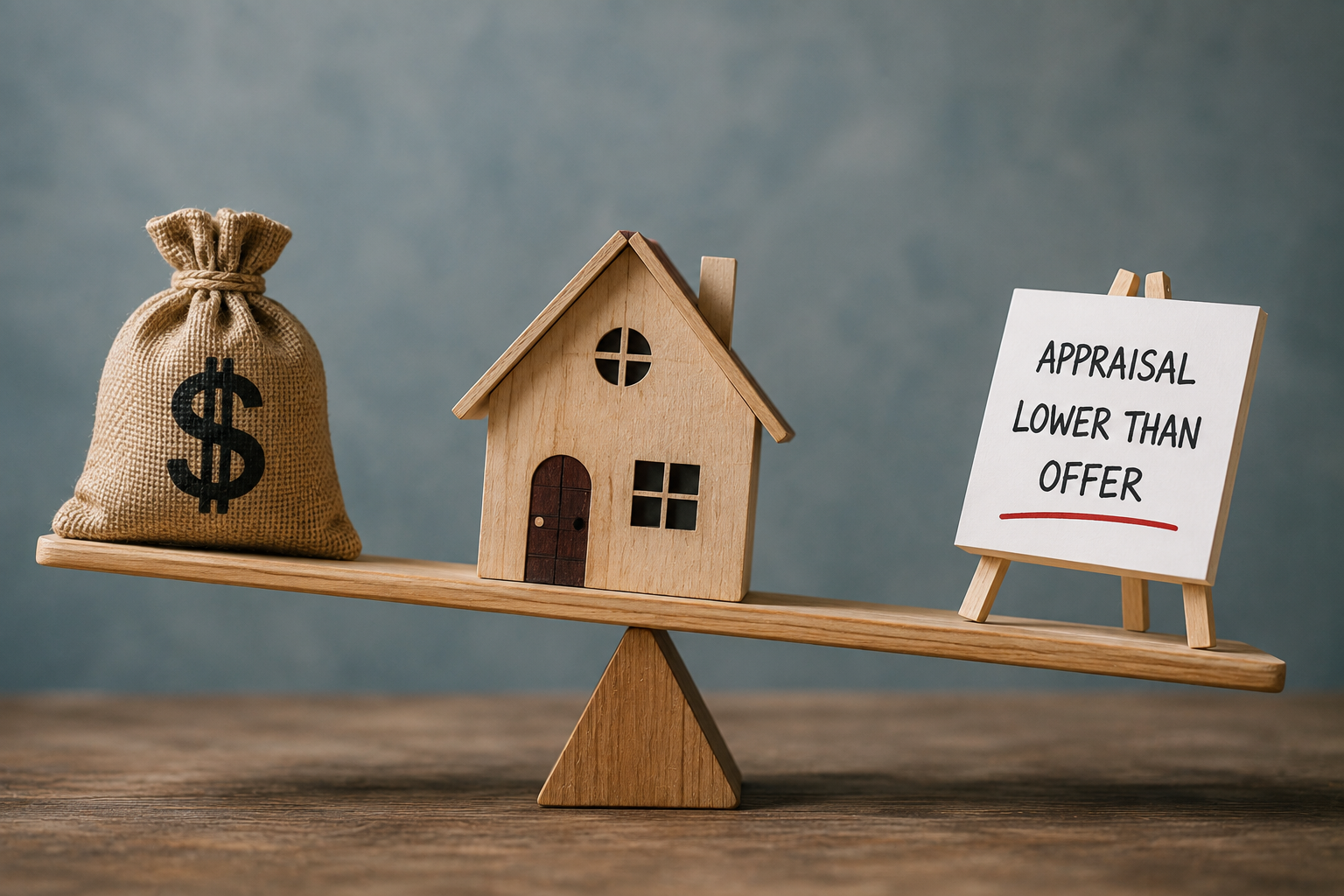
"The appraisal came in low."
Those six words can create a lot of anxiety for both buyers and sellers.
Does the seller have to lower the price?
Does the buyer have to come up with more cash?
Can the transaction still close?
The answer to all three questions is: it depends.
After helping buyers and sellers throughout the St. Louis area since 2014, I've been through many transactions involving appraisals. While a low appraisal can create an additional challenge, it doesn't automatically mean the transaction is going to fall apart.
The key is understanding why the appraisal matters, what the contract says, and what options may be available.
What Is a Home Appraisal?
Let's start with the basics.
When a buyer is financing a home, the lender will typically order an appraisal.
The appraisal is an independent opinion of the property's value performed by a licensed or certified appraiser.
The lender wants to make sure the property provides adequate collateral for the amount being financed.
An appraisal is different from a home inspection.
The inspector is primarily evaluating the physical condition of the property.
The appraiser is primarily evaluating its value for the lender.
Those are two very different jobs.
How Does an Appraiser Determine Value?
An appraiser will generally evaluate the property itself and compare it with relevant recent sales.
Some of the factors considered may include:
- Location
- Square footage
- Number of bedrooms and bathrooms
- Lot size
- Condition
- Updates
- Finished living space
- Recent comparable sales
- Features such as garages, basements, pools, or acreage
But here's where things can get complicated.
No two houses are exactly alike.
That's especially true throughout the St. Louis area.
We have historic homes in St. Louis City and Kirkwood, established subdivisions throughout St. Louis County, newer construction in parts of St. Charles County, condos, villas, acreage properties, and neighborhoods where homes built decades apart sit near one another.
Finding truly comparable sales isn't always simple.
Why Would an Appraisal Come in Below the Purchase Price?
There are several possible reasons.
One of the most common occurs in a competitive market.
Imagine a home is listed for $400,000 and several buyers want it.
Competition pushes the accepted offer to $425,000.
The buyers may absolutely believe the house is worth $425,000 to them.
But the appraiser still has to support that value using market data.
If recent comparable sales don't support the contract price, the appraisal could come in lower.
Unique homes can create similar challenges.
A property with significant acreage, unusual improvements, a unique location, or features that aren't common in the surrounding area may simply have fewer comparable sales available.
A Low Appraisal Doesn't Automatically Change the Purchase Price
This is one of the biggest misconceptions I hear.
If a home is under contract for $425,000 and appraises for $415,000, the purchase price doesn't automatically become $415,000.
The seller doesn't automatically have to reduce the price.
And the buyer doesn't automatically have to pay the difference.
Instead, we need to look at the contract.
What did the buyer and seller agree to regarding the appraisal?
Were there appraisal protections?
Was an appraisal gap included?
Are there other terms that affect what happens next?
This is why the details of an offer matter so much.
What Is an Appraisal Gap?
Appraisal gaps became much more familiar to buyers during highly competitive real estate markets.
In simple terms, an appraisal gap provision may address what the buyer is willing to do if the home appraises below the agreed-upon purchase price.
For example, a buyer might agree—depending on the exact contract language—to cover some amount of difference between the appraised value and purchase price.
Why would a buyer consider doing that?
Because in a multiple-offer situation, it can give a seller additional confidence in the buyer's offer.
Think back to our previous article about why the highest offer isn't always the best offer.
A very high purchase price may look fantastic.
But a seller also needs to ask:
"What happens if the appraisal doesn't support that price?"
That's part of evaluating the true strength of an offer.
What Options Are Available After a Low Appraisal?
The options depend heavily on the terms of the contract, so there's no universal answer.
Depending on the situation and the agreement between the parties, possible outcomes might include:
- The seller agrees to reduce the purchase price.
- The buyer brings additional funds to closing.
- Buyer and seller negotiate a compromise.
- The parties challenge or seek reconsideration of the appraisal when appropriate.
- The transaction proceeds according to an appraisal gap or other provision already negotiated.
- In some circumstances, a party may have rights under the contract that affect whether the transaction continues.
This is exactly why I don't like to give buyers or sellers generic advice when an appraisal comes in low.
First, we need to understand the contract.
Then we develop a strategy.
Can You Challenge a Low Appraisal?
Sometimes there may be an opportunity to request that an appraisal be reconsidered.
That doesn't mean simply saying:
"We don't agree with it."
There needs to be a legitimate reason.
Perhaps an important comparable sale wasn't considered.
Maybe information about the subject property was incorrect.
Perhaps there are relevant features or improvements that weren't adequately reflected.
When appropriate, information may be provided through the proper process for the appraiser or lender to consider.
But it's important to understand that there's no guarantee the appraised value will change.
What Sellers Should Know About Appraisals
If you're selling your home, the highest offer can be exciting.
But I want us thinking beyond the initial contract.
Let's say your home is listed at $500,000.
Buyer A offers $550,000.
Buyer B offers $535,000.
It would be easy to assume Buyer A is obviously the better choice.
But what if Buyer A has terms that leave considerable uncertainty if the property appraises below $550,000, while Buyer B has provided stronger appraisal-related terms?
Now we have a more complicated decision.
That doesn't mean Buyer B is automatically better either.
It means we need to understand the entire offer.
My job is to help my sellers identify these issues before they accept a contract whenever possible.
What Buyers Should Know About Appraisals
Buyers also need to understand the potential consequences of the terms they're offering.
In a competitive situation, you may hear other buyers are offering over asking price.
It's tempting to simply increase your number to win.
But before doing that, we should discuss:
What do comparable sales suggest about value?
How much cash do you have available?
What happens if the appraisal is low?
How much additional money, if any, would you genuinely be comfortable contributing?
How would additional cash affect your down payment, emergency fund, or other financial goals?
Winning the house is exciting.
But I want you to understand the potential financial implications of the offer you're making.
Appraised Value and Market Value Aren't Always Exactly the Same
This is another concept that can be confusing.
An appraisal is an opinion of value prepared for the lender.
Market value is ultimately influenced by what buyers are willing to pay and sellers are willing to accept under current market conditions.
Those numbers often align.
Sometimes they don't.
In a rapidly appreciating or highly competitive market, buyer demand can occasionally move faster than the closed comparable sales appraisers have available.
Unique properties can also be difficult to value because there may simply not be enough truly similar recent sales.
That's why context matters.
Preparation Before the Offer Can Reduce Surprises
When I'm representing a buyer who's considering an aggressive offer, I don't want our first conversation about appraisal risk to happen after the appraisal arrives.
We should discuss it before writing the offer.
Similarly, when I'm representing a seller reviewing multiple offers, I want to consider appraisal risk before we choose a buyer.
This goes back to something I believe strongly about real estate:
Good strategy is proactive, not reactive.
We can't prevent every problem.
But when we've discussed the possibilities in advance, we're much better prepared if one occurs.
Don't Panic
If you're currently in a transaction and you've just learned that the appraisal came in low, don't immediately assume the deal is dead.
Take a look at the numbers.
Review the contract.
Understand the available options.
Then decide what makes sense.
Sometimes the difference is small enough that buyer and seller can find common ground.
Sometimes the contract already tells us exactly what happens.
And sometimes we need to work through a more complicated negotiation.
The important thing is not to make an emotional decision before you understand the situation.
Final Thoughts
A low appraisal can certainly create an unexpected hurdle, but it doesn't automatically mean a real estate transaction is over.
For both buyers and sellers, the best time to think about appraisal risk is before the contract is signed.
Buyers should understand what they're agreeing to if they offer significantly above the asking price.
Sellers should evaluate whether the highest offer provides enough protection if the appraisal doesn't support that number.
And both sides should understand the appraisal-related terms of their contract.
That's why I believe good real estate representation involves much more than getting an offer accepted.
It's about looking several steps ahead, identifying potential challenges, and having a strategy in place before you need it.
Frequently Asked Questions
Does a seller have to lower the price if the appraisal comes in low?
Not automatically. What happens after a low appraisal depends on the terms of the purchase contract and what the buyer and seller have agreed to.
Does the buyer have to pay the difference between the appraisal and purchase price?
Not necessarily. The answer depends on the contract, financing, and any appraisal-related provisions that were negotiated.
Can a low appraisal be challenged?
There may be circumstances where additional information or corrections can be submitted through the lender's appraisal reconsideration process. However, there's no guarantee that the appraised value will change.
Is an appraisal the same thing as a home inspection?
No. A home inspection primarily evaluates the property's physical condition, while an appraisal primarily provides an opinion of value for the lender.
Should I worry about an appraisal if I'm offering over asking price?
It's something you should discuss with your REALTOR® and lender before submitting the offer. Offering above list price doesn't automatically mean the home won't appraise, but understanding the potential financial consequences of a low appraisal is important.
Selling Your Home?
Get your home's value - our custom reports include accurate and up to date information.