

%201.png)

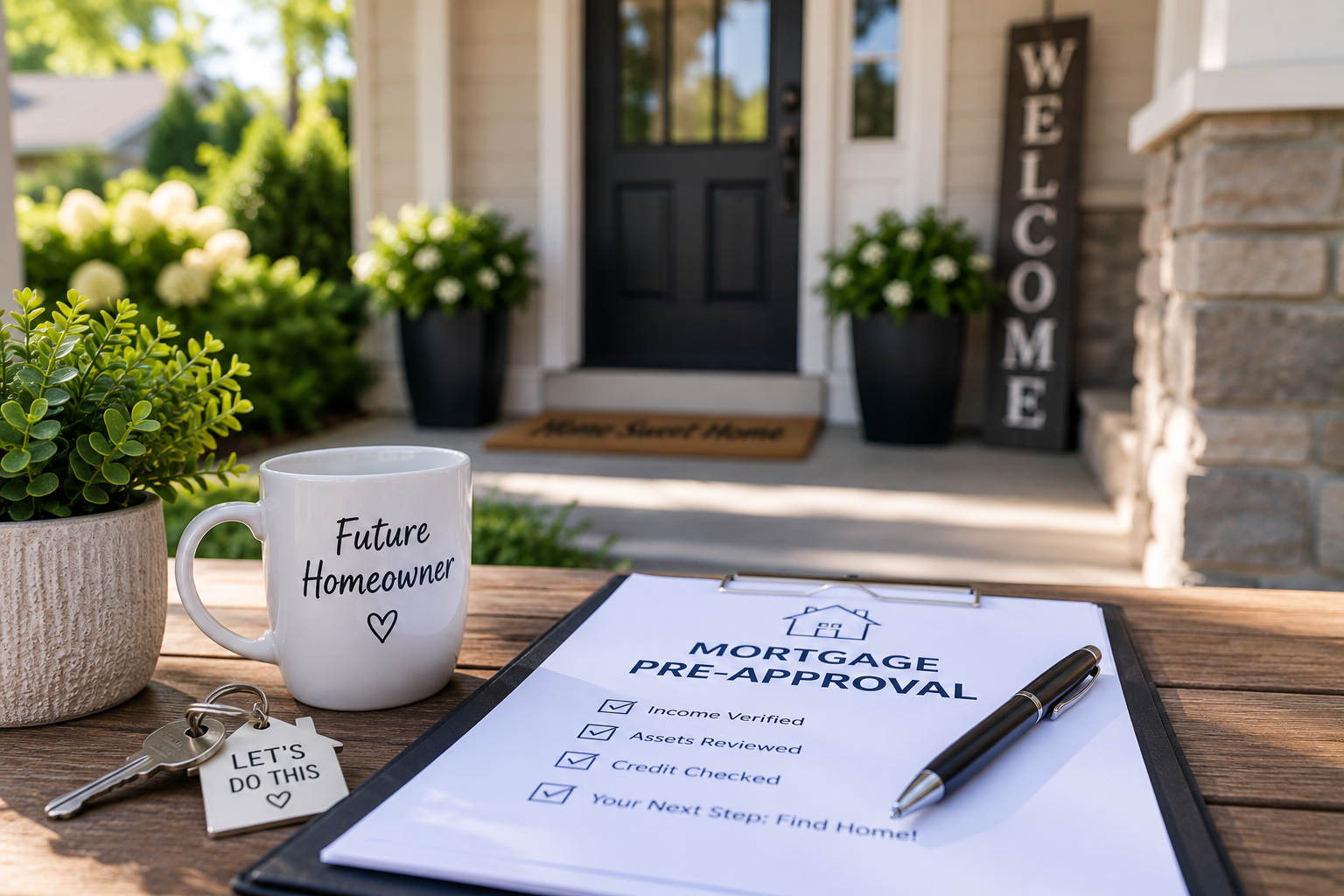
Why You Should Get Pre-Approved Before You Start Looking at Homes

Krista Hartmann
Comfortable and confident – those are some of the feelings you come away with after meeting Krista...
Comfortable and confident – those are some of the feelings you come away with after meeting Krista...
If you're thinking about buying a home, what's the first thing you should do?
Most buyers would probably say:
"Start looking at houses."
I understand why. Looking at homes is the fun part.
But if you're serious about buying, one of the most important things you can do before you fall in love with a property is get pre-approved for your financing.
After helping buyers throughout the St. Louis area since 2014, I've seen firsthand how much easier the home-buying process can be when buyers have their financing in place before we begin seriously looking at homes.
A pre-approval isn't just a piece of paper your REALTOR® wants you to get.
It's an important part of developing your entire home-buying strategy.
What Is a Mortgage Pre-Approval?
A mortgage pre-approval is an evaluation by a lender of your financial situation to determine how much you may be qualified to borrow.
Depending on the lender and loan program, they'll typically review information such as your:
- Income
- Employment
- Credit
- Assets
- Debts
- Down payment
- Overall financial picture
The lender can then discuss potential loan programs and provide an estimate of the price range you may qualify for.
Keep in mind that a pre-approval isn't the same as final loan approval. Your financing will still need to go through underwriting, and the property itself will generally need to meet lender requirements.
But it gives us a much stronger starting point.
Pre-Approval Helps Determine Your Real Budget
One of the biggest reasons to get pre-approved early is that the price of the home isn't the only number that matters.
Your monthly payment matters too.
Let's say you're approved to purchase a $450,000 home.
Does that automatically mean you should shop for $450,000 homes?
Not necessarily.
I want my buyers to understand what that purchase may actually look like each month.
Depending on the property and financing, your housing expense can include more than principal and interest. Property taxes, homeowners insurance, mortgage insurance when applicable, and homeowners or condo association fees can all affect your payment.
Two homes with the exact same purchase price can potentially have different monthly costs.
That's especially important in the St. Louis area, where property taxes and association fees can vary from one property to another.
The better question isn't simply:
"How much house can I qualify for?"
It's:
"What monthly payment am I comfortable with?"
Those aren't always the same number.
It Keeps You From Falling in Love With the Wrong House
I've seen this happen to buyers.
They start browsing online and eventually find a house they love.
The kitchen is perfect.
The backyard is exactly what they wanted.
The location works.
Then they talk with a lender and discover that the monthly payment is significantly higher than they expected—or that they don't currently qualify for the price range they've been searching.
That's disappointing.
And it's often avoidable.
I'd much rather have those financial conversations before we start seriously touring homes.
Once we understand your comfortable price range, we can focus our search on homes that actually make sense for you.
It Helps Us Understand All of Your Options
Another reason I like buyers to speak with a lender early is that financing isn't one-size-fits-all.
Different buyers may qualify for different loan programs, down-payment options, or other financing structures.
A good lender can explain the options that may be available based on your particular financial situation.
This can be especially helpful for first-time buyers who sometimes assume they need a 20% down payment before they can purchase a home.
That isn't necessarily true.
Depending on your circumstances, there may be financing options requiring significantly less.
The important thing is finding out what applies to you rather than relying on something you heard from a friend, family member, or social media post.
Pre-Approval Makes You a More Serious Buyer
Now let's talk about what happens when you find the house.
Imagine we tour a home Saturday morning and you immediately know you want to write an offer.
We call the listing agent and discover there are already two other interested buyers.
This isn't the time to start looking for a lender.
We need to be ready.
In many transactions involving financing, sellers expect to see evidence that the buyer has already spoken with a lender and has the financial ability to complete the purchase.
From the seller's perspective, this makes sense.
They're taking their home off the market and trusting that the buyer they've chosen can actually obtain financing.
A strong pre-approval can help give the seller more confidence in your offer.
In Multiple Offers, Preparation Matters Even More
In Article 30, I explained how I help my buyers approach multiple-offer situations strategically.
One of the biggest advantages a buyer can have is simply being prepared.
When I know my buyer may want to write an offer, I often contact the listing agent right away.
I introduce myself.
I ask about the seller's priorities.
I ask whether they're planning to wait until their stated offer deadline or whether they might consider accepting an offer early if it makes sense.
I may follow up as the situation develops to find out whether offers have been received and, when the listing agent is willing and able to share information, what the competitive situation looks like.
Sometimes we determine that speed could be important.
If that's the case, I want my buyer in a position to act.
If we're still trying to get financing information together while another well-qualified buyer submits a strong offer, we may lose an opportunity we didn't need to lose.
That's one reason I believe the work we do before finding the home can be just as important as what we do afterward.
Pre-Approval Can Uncover Problems Early
There's another benefit buyers don't always consider.
Sometimes the pre-approval process uncovers something unexpected.
Maybe there's an issue on your credit report.
Maybe your debt-to-income ratio needs some attention.
Maybe you've recently changed jobs and the lender needs additional documentation.
Maybe the way you've planned to use your down-payment funds creates questions.
Would you rather discover that while you're casually planning to buy—or three days after you've found your dream home?
I'd much rather know early.
Sometimes a lender can give a buyer specific steps to take so they'll be in a stronger position to purchase later.
That may mean waiting a little while.
But if waiting ultimately helps you buy with greater confidence, that's valuable information.
Your Maximum Approval Isn't Your Target Price
This is important enough to say twice.
You do not have to spend the maximum amount you're approved to borrow.
I want my buyers to have a life after they buy their house.
You may want to travel.
Go out to dinner.
Save for retirement.
Pay for children's activities.
Make improvements to the house.
Or simply sleep at night without worrying about the mortgage payment.
Your lender helps determine what you may qualify to borrow.
You determine what you're comfortable spending.
My role is to help make sure the homes we're considering fit within the parameters you've established.
Should You Talk to a REALTOR® or Lender First?
Either is fine.
You don't have to have everything figured out before calling me.
In fact, I frequently talk with buyers who are months away from purchasing.
If you haven't selected a lender yet, I can connect you with trusted local lenders so you have options.
Then we can work together to determine what makes sense.
The lender handles the financing side.
I help you understand the real estate side.
Those two pieces work together throughout the buying process.
What If You're Paying Cash?
Obviously, a cash buyer doesn't need mortgage pre-approval.
However, preparation still matters.
When the time comes to write an offer, the seller may want documentation showing that the buyer has sufficient funds available to complete the purchase.
So even cash buyers should have their financial documentation organized before they begin making offers.
Again, the theme is preparation.
Don't Make Major Financial Changes After Pre-Approval
This is another important conversation I have with buyers.
Getting pre-approved doesn't mean you can forget about your finances until closing.
Before making significant financial changes during the home-buying process, talk with your lender.
That can include things like:
- Financing a vehicle
- Opening new credit accounts
- Making large purchases on credit
- Changing jobs
- Moving large amounts of money between accounts
Something that seems unrelated to your home purchase could potentially affect your loan qualification.
When in doubt, ask your lender before making the change.
It's much easier to ask a question beforehand than solve a financing problem right before closing.
Pre-Approval Gives Us a Strategy
Ultimately, this is why I want buyers pre-approved.
It's not about checking a box.
It's about strategy.
Once we understand your financing, we can make better decisions about:
Where to look.
What price range makes sense.
How property taxes or association fees could affect your budget.
How much cash you may need.
How quickly we can act.
And what type of offer you're comfortable making when we find the right property.
Buying a home involves enough unknowns.
I want to eliminate as many of them as possible before we start.
Final Thoughts
If you're planning to buy a home in St. Louis, St. Louis County, St. Charles County, Jefferson County, or the surrounding area, getting pre-approved should be one of your first steps.
Not because your REALTOR® needs another piece of paperwork.
Because you deserve to understand your financial position before making one of the largest purchases of your life.
A good pre-approval gives us information.
That information gives us options.
And those options allow us to develop a strategy.
Then, when the right home comes along, instead of scrambling to figure out whether you can buy it, we can focus on the question that really matters:
Is this the right home for you?
Frequently Asked Questions
How far in advance should I get pre-approved for a mortgage?
You can begin talking with a lender well before you're ready to purchase. If you're several months away, an early conversation can help identify anything you should address before beginning your home search. Your lender can tell you when it's appropriate to complete or update the formal pre-approval.
Does getting pre-approved mean I'm guaranteed a mortgage?
No. A pre-approval isn't final loan approval. Your finances and the property will still need to satisfy the lender's requirements throughout the loan process.
Do I need 20% down to buy a house?
Not necessarily. Depending on your qualifications and loan program, options with lower down payments may be available. A lender can explain which programs may fit your circumstances.
Should I get pre-approved before contacting a REALTOR®?
You don't have to. I'm happy to talk with buyers before they've contacted a lender and can connect them with trusted local lending professionals when needed. The important thing is getting the financing piece in place before you're ready to make an offer.
Can I buy a home for less than the amount I'm pre-approved for?
Absolutely. Your lender determines how much you may qualify to borrow, but that doesn't mean you should spend that amount. I encourage buyers to choose a price and monthly payment that fit comfortably within their overall financial goals.
Selling Your Home?
Get your home's value - our custom reports include accurate and up to date information.